How We Find and Fix Roof Leaks
A ceiling stain rarely sits directly under the cause. Water can run along battens, sarking or a valley before it drips through, so we trace the leak back from the inside mark to the point where water is getting in.
The usual culprits are cracked or slipped tiles, failed ridge pointing, rusted valley irons, lifted flashings and gaps around vents, skylights and solar brackets. Once we've found the source, we fix that cause rather than patching the symptom, and check the area around it for the next weak spot.
Flexible Pointing Explained
Older roofs were pointed with a cement mix that cracks as the roof moves with heat and cold. Modern flexible pointing stays slightly elastic, so it holds a seal for much longer.
When we repoint, we prepare the ridge, apply flexible pointing in a consistent bead and tool it neatly so water runs off rather than sitting on the ridge.
Signs Your Roof Is Ready for Restoration
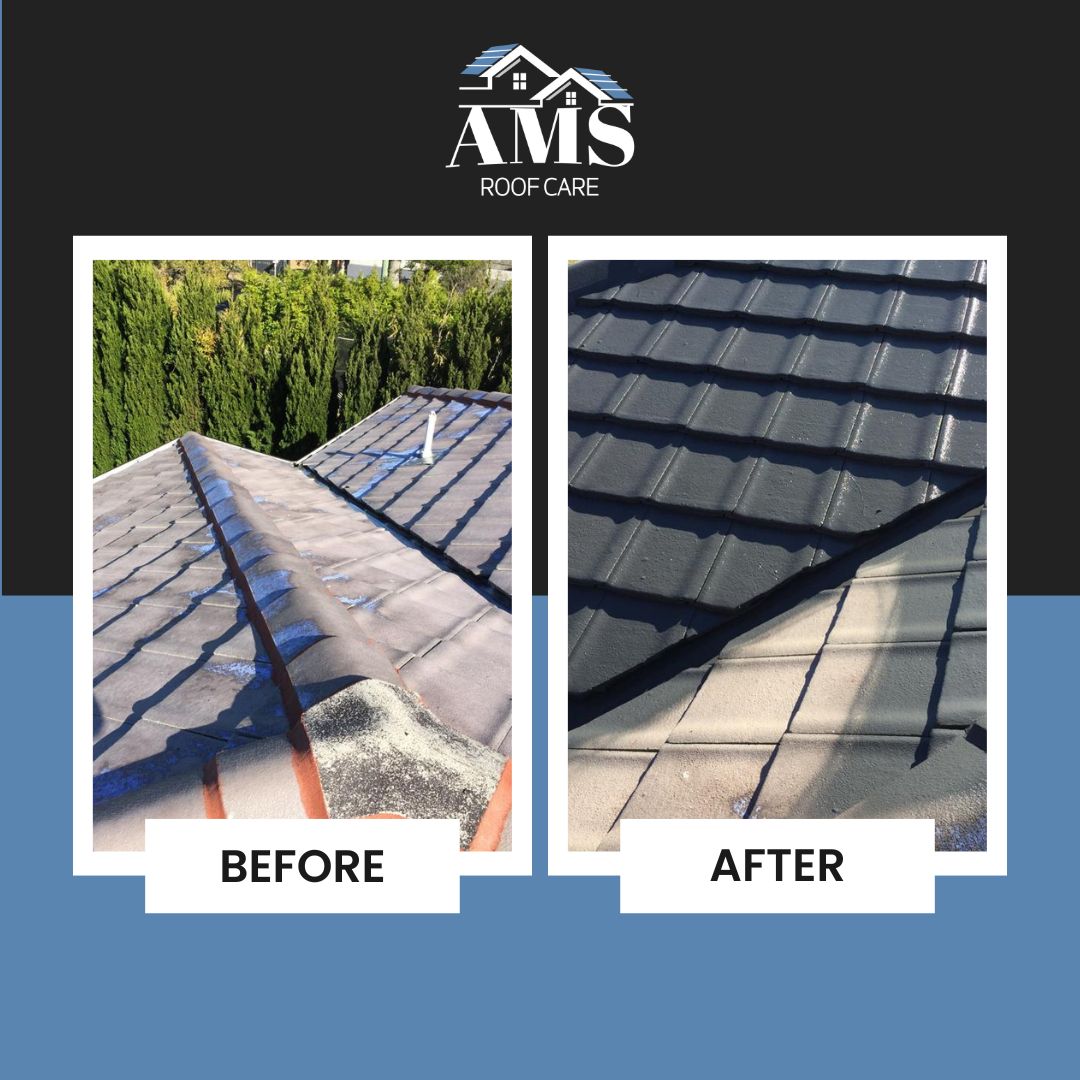
Fading or patchy colour, lichen across large areas, tiles that stay dark long after rain and cracked pointing on most ridges all mean the surface has worn out.
At that stage, repairing one spot at a time costs more over the years than restoring the whole roof once. If the tiles and battens are still sound, restoration is usually the best-value option.